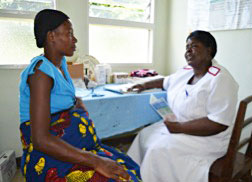
Lilongwe, Malawi—An experienced nurse-midwife at Kaporo Rural Hospital in northern Malawi, Abigail Nyasulu is working toward a world without tuberculosis (TB). Nurse Abigail, as she is known, has been successfully including TB awareness in her educational sessions with pregnant women who come to the hospital every Wednesday for prenatal care.
She is able to explain the benefits of TB screening for the mother and unborn child, can properly identify suspected cases of TB—persistent coughing for over two weeks—and guides women through the testing process. Since last October, Nurse Abigail has identified and referred for testing an average of 15 clients a month from the 200 to 300 women who attend pregnancy-related health checkups.
Through the U.S. Agency for International Development’s (USAID’s) global Maternal and Child Health Integrated Program (MCHIP), Jhpiego is working with the Ministry of Health to increase TB screening in routine antenatal health services in Karonga District in the Northern Region of Malawi. Nurse Abigail is among more than 100 service providers who are participating in a pilot program to integrate TB with focused antenatal care (TB/FANC). The goal of the TB/FANC pilot program, which began in 2012, is to enhance active TB case finding among women accessing antenatal care services by 50 percent and improve maternal and neonatal health outcomes.
Nurse Abigail’s TB educational sessions are all part of her workday. She starts with group education for the pregnant women on birth preparedness, danger signs of pregnancy, labor and puerperium, HIV, nutrition and other health care topics. With regard to HIV, she routinely conducts counseling sessions and offers HIV testing to every pregnant woman. For those who test HIV-positive, she monitors their treatment and continues to provide support during all antenatal visits through childbirth and motherhood.
While policy and programs for universal antenatal HIV testing and treatment have been put into effect comprehensively in Malawi, screening for TB among pregnant mothers has not been routine. That has been the case despite the increase in TB incidence being attributed to HIV, the known risk of postnatal exposure of babies born to mothers with TB and the reality of the disease as a leading cause of suffering and death in Malawi.
Though there has been a decrease in the estimated number of TB cases (with the World Health Organization’s Global Tuberculosis Report 2012 estimating a rate of 191 TB cases per 100,000 people in 2011, a substantial decrease from the 326 per 100,000 as recorded in 1990 in Malawi), there is still a gap in improved active case finding and treatment, particularly among pregnant women.
That’s why the Ministry of Health embarked on the pilot program to integrate TB screening with antenatal care.
The TB/FANC pilot program has enhanced designated TB microscopy sites for the diagnosis of TB at the main district hospital and the following health centers: Fulirwa, Iponga, Kaporo, Kasoba and Nyungwe. Under the program, participating health workers have been trained in TB awareness and diagnosis for pregnant women, and provided with TB/FANC information and job aids. “Measuring for Success” tape measures—developed by Jhpiego under the USAID global program TB Care II—assist providers with reminder messages on core interventions in FANC, including TB screening. Existing antenatal and cough registers have also been modified to include case finding and a record of the time of TB diagnosis and initiation of treatment.
According to Nurse Abigail and other providers in the Kaporo rural community, the success of rolling out TB integration in antenatal care has largely been due to the inclusive initial training of all relevant service-point providers, including midwives, nurses, clinicians, laboratory staff and health surveillance assistants (HSAs) who conduct community outreach clinics.
“With all of us trained together, it has ensured common awareness, understanding of roles and priority of the initiative, hence smooth collaboration in referral, recordkeeping and follow-up on clients,” said Nurse Abigail.
Most women show up at the clinic already aware of the program, she added, as trained HSAs are working with community leaders to sensitize women and families. Nurse Abigail’s successes at Kaporo Rural Hospital will be shared with all the other facilities—striving toward overall success of the pilot initiative and prospective scale-up to other districts in Malawi.
Source: Jhpiego