

India warns it is running out of TB drug
MUMBAI—India faces a potential shortage of a critical medication for drug-resistant tuberculosis that could deepen an already acute drug- shortfall-problem in the country with the highest burden of the deadly contagious disease.
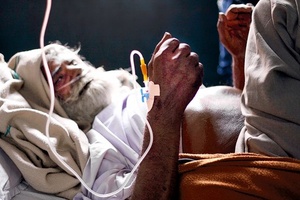
Tuberculosis officials in several Indian states said this week that their stocks of kanamycin, an injectable antibiotic commonly used to treat drug-resistant TB, are running low, and an Indian government official acknowledged that the country has only a three-month supply left.
The potential shortage would be the latest of several that India is facing with its TB drugs, and is particularly worrying because sporadic supplies of medications for drug-resistant forms of the disease can actually fuel further drug resistance. If a patient who is ill with TB starts and then stops taking a TB drug, even if it isn't for long, the bacteria that cause it can quickly become resistant to it. Patients can also die waiting for drugs, according to TB experts.
India initially asked the Global Drug Facility, a TB drug procurement organization in Geneva, for an emergency supply of about 400,000 vials of the antibiotic, officials from both the Indian government and the Stop TB Partnership, which oversees the GDF, confirmed. Then the government failed to sign tax exemption and port clearance documents to allow importation of the shipment from its manufacturer in Japan.
Niraj Kulshrestha, a senior official at the country's Central TB Division, said he didn't know why the documents weren't signed. He said the government now will resolve the shortage "by making emergency purchases" locally. "By the first week of July we will get the drugs," he said.
TB officials around the country say they can't wait long. In the state of Bihar, current stocks of kanamycin will last only until the first week of July, according to an official who manages the state TB drugstore. Of 35,000 vials the drugstore requested in the first week of May, it got only 10,000, according to the official. The rest of the medicines have yet to reach Bihar, he said. The Central TB Division hasn't informed them when the medicines will arrive, he said.
"If this continues we will have to limit the number of new drug-resistant patients we enroll in the government program," the official said.
"There are enough medicines for patients till September, but there are no medicines in the buffer stock," said Pradip Patel, head of TB drug distribution for the western Indian state of Gujarat.
Since January, pediatric TB drugs have been in short supply in many Indian states, according to TB officials. The central government also has been unable to provide sufficient rifampicin, the most powerful TB drug, and another medicine, streptomycin. Dr. Kulshrestha said pediatric drugs will also reach clinics by next week.
The shortages have so angered tuberculosis patients and activists that they held a rare protest outside the federal health ministry in New Delhi Wednesday. "We are here today to demand answers," said 42-year-old Cassius Singh, one of the TB patients at the protest.
Blessina Kumar, a health activist and vice-chair of the coordinating board of the Stop TB Partnership, a Geneva-based organization, led the protest. She said that she wrote to the health ministry several times in the last year warning about looming drug shortages, but they "have been unwilling or unable to arrange the timely procurement of TB drugs" and have not shared information with the public, she said.
There is "only so much that global bodies can do," Ms. Kumar said. "TB is a disease in which you require a six-month uninterrupted supply of medicines. If you don't ensure this, patients suffer."
Dr. Kulshrestha said he spoke to activists after the protest and answered all their questions regarding the government's procurement of drugs. He added that the program always tries to be transparent in its work.
More than 1.5 million people currently receive free drugs at 13,000 Indian government centers nationwide. Tuberculosis kills more than 300,000 people in India every year, out of about 990,000 who died from TB globally in 2011, excluding those who were also infected with HIV.
Source: The Wall Street Journal

