

Action urged against fake TB drugs
Poor-quality medications are contributing to treatment resistance, researchers say
While health authorities have been combatting fake malaria drugs for years, they have paid little attention to TB medications. But a study published in February found that 9.1% of samples of the two most powerful TB drugs—isoniazid and rifampicin—purchased at private pharmacies in 19 cities in 17 countries lacked the proper amount of active pharmaceutical ingredient and failed basic quality-control tests. The failure rate was 16.6% in Africa and 10.1% in India. If drugs don't contain enough active ingredient, patients' TB bacteria can easily become resistant to them.
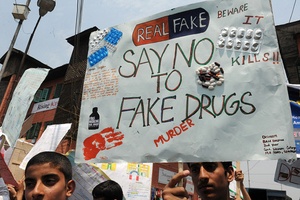
Now, in an essay published this week with other researchers in the journal PLOS Medicine, Rwanda's health minister, Agnes Binagwaho, called for a global treaty to combat fake and poor-quality drugs. "It is time for the tuberculosis community to recognize the causes and consequences of falsified and substandard drugs and to mobilize a global response," the essay says.
Rwanda was the only African country whose samples didn't contain any fake drugs in the study of TB-drug quality, said Roger Bate, an economist at the American Enterprise Institute who led the survey of drug quality, which was published in February in the International Journal of Tuberculosis and Lung Disease. He is also one of the authors of the latest study.
Rwanda is successful partly because the country's ministry of health tests every imported drug shipment and distributes drugs through a dedicated supply chain, according to the authors. Its good drug practices have played an "important role" in a 77% decline in TB deaths in the country between 2000 and 2011, the essay says.
"Drugs that are fake are killing people," Dr. Binagwaho said in an interview. "It's a matter of international security."
While Rwanda has its own national law and a partnership with the country's police and Interpol to bring those who sell fake drugs to justice, it isn't enough, she said. "We cannot be an island of good in the middle of the problem," she said. "You need global action."
A 2009 report by the Paris-based Organization for Economic Cooperation and Development, said three-quarters of fake drugs sold around the world originate in India. Fake versions of TB drugs such as rifampicin can be bought without a prescription in India, according to a 2012 report by Mr. Bate.
But India says its own government-sponsored studies have found that few of the drugs produced in the country are fake. The government also says it ensures the quality of drugs for its TB program, although as many as half of the TB patients are treated in the virtually unregulated private sector. Every quarter, laboratories contracted by the government test randomly selected drug samples sent by some government clinics in states and districts countrywide, according to a document of the Revised National Tuberculosis Control Program.
The idea of a global treaty to combat fake drugs has been simmering for a few years. All countries should criminalize the production and sale of fake drugs, and impose tighter standards and regulation to prevent poor-quality drugs from making it onto the market, said Amir Attaran, a professor of law and medicine at the University of Ottawa and another author of the essay.
"You need high absolute perfection or you get drug resistance," Dr. Attaran said of TB drugs. "They're cheap but unforgiving medicines."
But a global drug-quality treaty has a "high bar to clear," given all the countries that would need to approve, implement and then enforce it, said Bill Reid, senior director of global anticounterfeiting operations for Eli Lilly & Co. The company is pushing instead for strong national and regional laws and investing in technologies and working with Interpol to stem counterfeit-drug crimes.
"While we do not oppose the principle, we urge that concrete measures be taken rapidly—at the domestic and regional levels—to ensure this major threat to patient safety be addressed by competent authorities," he said.
Source:
The Wall Street Journal

