News
Brief news reports on Tuberculosis
By
Surendra K Sharma et al.
Published: July 10, 2013, 2:22 p.m.·
Tags:
None
Tuberculosis (TB) is a disease that is caused by a bacterial infection that affects an estimated two billion people (about a third of the world's population). However, most people have dormant (latent) infections and only a small percentage of people infected with TB will develop an active disease. Preventing latent TB infection (LTBI) developing into active TB, through the use of drugs, is an important part of global TB control. Treatment with the drug isoniazid for six months is recommended, but the treatment period is long, it can cause liver damage, and only about half of the people who start this drug treatment complete it.
Read More →
By
BMC Medicine
Published: July 10, 2013, 1:07 p.m.·
Tags:
None
Read More →
By
Hilda Mhagama
Published: July 10, 2013, 12:58 p.m.·
Tags:
None
Read More →
By
ECDC
Published: July 9, 2013, 8:09 p.m.·
Tags:
None
The use of rapid molecular assays has diagnostic value in tuberculosis identification and detection of drug resistance, although there is not enough evidence to recommend these tools in all populations and situations and they should not replace standard diagnostic methods.
Read More →
By
Firstpost.com
Published: July 5, 2013, 12:45 p.m.·
Tags:
None
Sale of tuberculosis drugs could be prohibited in open market as part of efforts to ensure calibrated and monitored administration of these medicines which would then only be given on daily basis free of cost by government registered outlets to patients.
Read More →
By
Mara Kardas-Nelson
Published: July 5, 2013, 12:27 p.m.·
Tags:
None
A new combination treatment has been tested in Southern Africa, but it is not available locally.
Read More →
By
Betsy McKay and Shreya Shah
Published: July 5, 2013, 12:14 p.m.·
Tags:
None
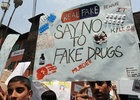
While health authorities have been combatting fake malaria drugs for years, they have paid little attention to TB medications. But a study published in February found that 9.1% of samples of the two most powerful TB drugs—isoniazid and rifampicin—purchased at private pharmacies in 19 cities in 17 countries lacked the proper amount of active pharmaceutical ingredient and failed basic quality-control tests. The failure rate was 16.6% in Africa and 10.1% in India. If drugs don't contain enough active ingredient, patients' TB bacteria can easily become resistant to them.
Read More →
By
Donald G. McNeil Jr.
Published: July 5, 2013, 12:11 p.m.·
Tags:
None
Substandard tuberculosis drugs sold by pharmacies in poor countries are a growing public health threat, but the problem could be alleviated if governments enforced World Health Organization standards, a new study reports.
Read More →
By
Agnes Binagwaho et al.
Published: July 5, 2013, 12:06 p.m.·
Tags:
None
Read More →
By
Seattle Biomedical Research Institute
Published: July 5, 2013, 11:38 a.m.·
Tags:
None
Despite decades of research on the bacterium that causes tuberculosis (TB), scientists have not had a comprehensive understanding of how the bacterium is wired to adapt to changing conditions in the host. Now, researchers at Stanford University, Seattle BioMed, Boston University and the Broad Institute, Max Planck Institute of Biology in Berlin, Germany, Caprion Proteomics Inc. in Montreal, Canada, Brigham and Woman’s Hospital (Harvard University), and Colorado State University have taken the first steps toward a complete representation of the regulatory network for Mycobacterium tuberculosis. This map of the network of genes that control the TB bacterium will yield unique insights into how the bacteria survive in the host, and how they can be tackled with new drug interventions. The landmark results are published this week in the journal Nature.
Read More →
Page 736 of 895 · Total posts: 10
←First
735
736
737
Last→